


USCIS Continues Its Push Toward Mandatory E-Filing
USCIS is moving closer to mandatory e-filing for immigration benefit requests. A new DHS interim final rule, effective immediately, gives the agency authority to require electronic filing, with a public comment period open through October 13, 2026.
The Push Toward Mandatory E-Filing, Explained
On August 11, 2026, DHS published an interim final rule amending 8 CFR 1.2 and 8 CFR 103.2. Specifically, the rule lets USCIS mandate e-filing for any benefit request that has been available for electronic submission for at least 180 days.
The move implements Executive Order 14247, which directs federal agencies to phase out Treasury’s paper lockbox system. It also builds on more than two decades of federal e-government mandates — from the 1998 Government Paperwork Elimination Act to the e-filing requirements DOL, DOS, and the IRS already impose on immigration-adjacent filings.
Once USCIS decides to require e-filing for a given form, it must post notice on its website and provide a 60-day grace period before enforcement begins. In addition, a new waiver process (via Form I-936) will let requestors who face genuine hardship keep filing on paper.
Importantly, this rule does not itself mandate e-filing for any specific form yet — it simply gives USCIS the legal tool to do so. As a result, the real-world impact will roll out form-by-form in future USCIS announcements.
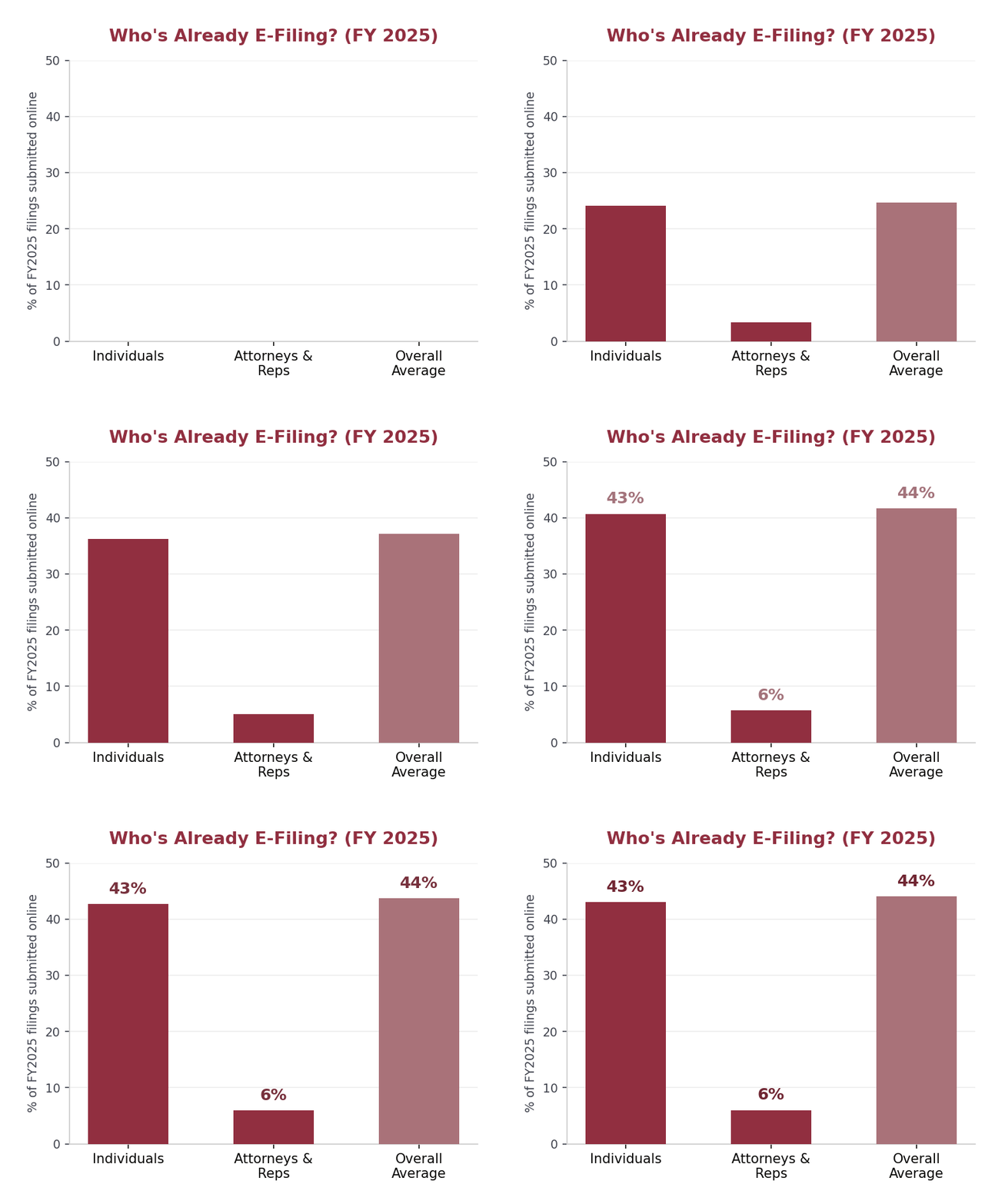
Share of USCIS benefit requests voluntarily e-filed in FY 2025, by requestor type. Attorneys and accredited representatives lag far behind individual filers — a gap this rule is designed to close.
Source: U.S. Department of Homeland Security (2026), 91 Fed. Reg. 51924, 51934.
The numbers behind this shift are striking.
For instance, USCIS took in more than 13 million benefit requests in FY 2025 and rejected over 1 million paper filings. A quarter of those rejections came from fee errors alone — mistakes that e-filing’s automated fee calculation would have caught before submission.
Paper processing cost USCIS nearly $10.86 million in postage in FY 2025. The agency also completed 8.7 million internal file transfers between its 142 facilities, which store 58.6 million active case files.
DHS projects mandatory e-filing will generate roughly $518 million in annual net cost savings to requestors, plus $140 million in annual fee-related transfers back to filers. In total, over the rule’s ten-year (FY2027–2036) implementation window, DHS estimates this translates to $4.4 billion in discounted net savings and $1.2 billion in transfers.
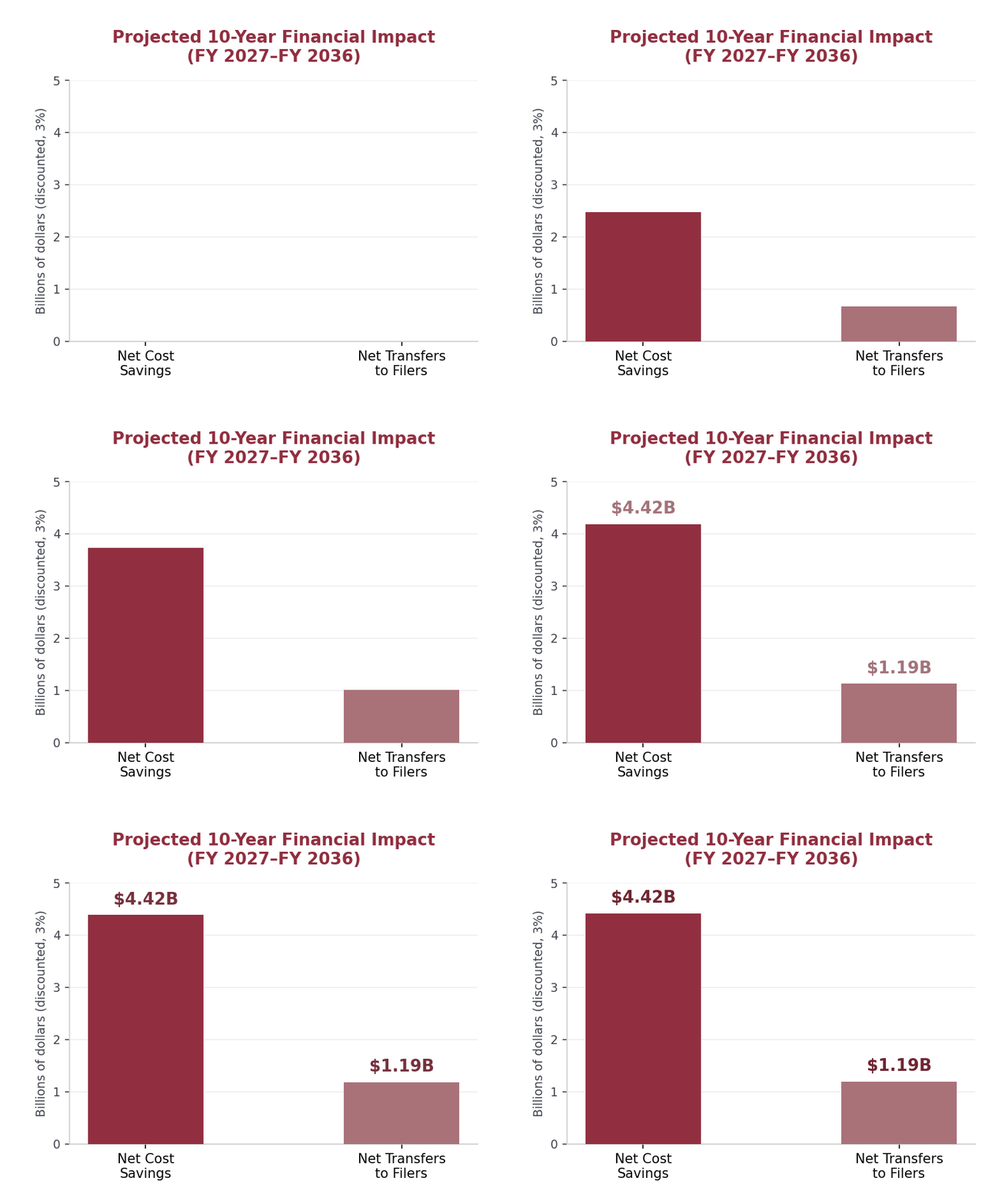
DHS’s discounted (3%) estimate of net cost savings to requestors and net fee-discount transfers from government to requestors over the FY2027–FY2036 implementation period.
Source: U.S. Department of Homeland Security (2026), 91 Fed. Reg. 51924, 51925–51926.
SECTOR SPOTLIGHT: H-2A, H-2B & TN EMPLOYERS
One category is conspicuously absent from the e-filing rolls today: Form I-129, Petition for Nonimmigrant Worker — the filing vehicle for H-2A agricultural workers, H-2B seasonal workers, and TN professionals. All three currently require paper submission. As a result, these employers see none of the efficiency gains DHS describes elsewhere in this rule.
In practice, that gap carries real cost. H-2A and H-2B petitions are especially fee- and evidence-complex. They often cover dozens of workers, multiple worksites, and layered fee calculations. That complexity makes them prime candidates for the kind of transcription and fee errors DHS says accounted for a quarter of all paper rejections in FY 2025.
Automated fee calculation, real-time rejection alerts, and instant receipt confirmation would be especially valuable here. H-2A and H-2B employers already work against tight, seasonal labor-need start dates, where a paper rejection-and-refile cycle can mean unstaffed peak seasons or missed harvest windows.
Should USCIS extend e-filing eligibility to Form I-129, H-2A, H-2B, and TN employers could expect meaningfully faster receipt processing. They could also see fewer NOIDs and RFEs tied to incomplete filings, plus the same case-tracking and fraud-detection advantages already benefiting other benefit categories.
What should employers, petitioners, and their counsel do now?
First, expect USCIS to begin mandating e-filing for individual forms in phases rather than all at once. As of the rule’s publication, 22 forms already qualify for mandatory treatment because they’ve been e-filing-eligible for at least 180 days. Watch USCIS’s website for form-specific notices and the accompanying 60-day grace periods.
Second, if e-filing genuinely isn’t feasible for a specific case, know that Form I-936 exists. However, USCIS will scrutinize waiver requests closely, particularly for represented parties and business entities. The agency presumes these parties already have adequate access to e-filing.
Third, remember this is technically still a proposal-in-effect. DHS is accepting public comments through October 13, 2026 on the entire rule, and comments could still shape how USCIS implements it. Given how quickly USCIS plans to expand mandatory e-filing form-by-form, staying current on which forms are affected — and when — will matter for filing strategy across H-2A, H-2B, TN, and PERM caseloads alike.
Don’t Miss the Next Update
USCIS is expected to announce which forms become e-filing-mandatory in phases over the coming months.
Follow us on social media to stay on top of every update as soon as it’s announced.
U.S. Department of Homeland Security. (2026, August 11). Mandatory electronic filing (e-filing), 91 Fed. Reg. 51924. https://www.federalregister.gov/documents/2026/08/11/2026-16313/mandatory-electronic-filing-e-filing
Farmer Enterprises Insights — This post is for general informational purposes and does not constitute legal advice.